

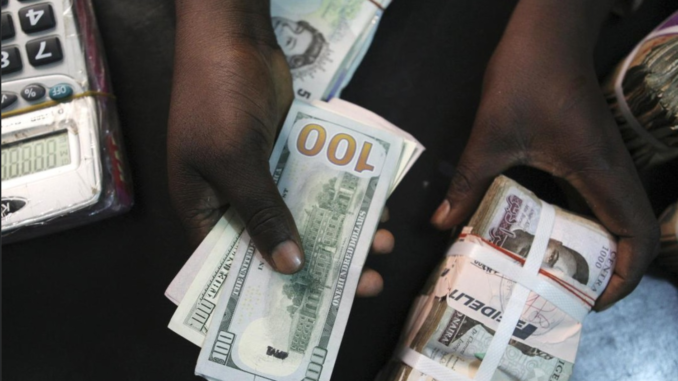
Naira Holds Steady as New Quarter Opens with Controlled Market Momentum
Nigeria’s currency stepped into April with a quiet show of strength, maintaining composure against the U.S. dollar as the second quarter of 2026 got underway. By Wednesday morning, April 1, trading activity pointed to a market finding its footing steady, measured, and largely free of the sharp swings that once defined it.
At the official window, activity at the Nigerian Foreign Exchange Market (NFEM) revealed only slight movement. Early figures placed the naira’s opening rate at ₦1,385.27 to the dollar, signaling continuity rather than disruption.
Behind this relative calm lies the sustained deployment of the Electronic Foreign Exchange Matching System (EFEMS). Market participants say the system has reshaped trading behavior, stripping away much of the erratic volatility seen in earlier periods. Supply from independent sources has remained consistent, offering support just as businesses begin executing fresh quarterly budgets a time typically associated with increased forex demand.
Away from the formal channels, the parallel market echoed a similar tone of stability. In key commercial cities Lagos, Abuja, and Kano currency dealers quoted the dollar within a tight band of ₦1,405 to ₦1,418. The gap between official and street rates has narrowed considerably, now sitting between roughly ₦21 and ₦34.
That convergence is no accident. Recent policy adjustments have brought licensed Bureau De Change operators deeper into the official supply network, trimming the space for speculative trading and tightening alignment across both markets.
Several underlying factors are shaping this early-April equilibrium.
For one, the typical surge in demand tied to quarterly settlements has yet to rattle the system. Ordinarily, companies rushing to clear international obligations would push rates upward. This time, however, liquidity has acted as a buffer. By the end of March, available funds in the system had climbed past ₦8 trillion, enough to absorb demand without triggering sudden spikes.
Nigeria’s external reserves, while slightly reduced toward late March, remain robust at about $49.40 billion. Analysts view this level as sufficient for ongoing market interventions, giving the Central Bank room to manage fluctuations when necessary.
Oil earnings continue to play their part as well. With steady production levels and favorable pricing for Bonny Light crude, foreign exchange inflows have remained reliable, feeding into the broader supply pool.
Looking ahead, analysts anticipate the naira will trade within the ₦1,380 to ₦1,420 range during the opening week of April. Attention is now turning to the Central Bank’s next policy signals, particularly around interest rates. Its firm, anti-inflation stance remains central to maintaining current stability.
At the same time, investors are watching developments in the banking sector recapitalization process. Once finalized, it is expected to reinforce the financial system’s capacity to handle large and complex foreign exchange transactions, another piece in the puzzle of sustaining long-term market confidence.

Leave a Reply